Fish Advisories for New York City & Marine Waters
NYC boasts exciting freshwater and marine water fishing opportunities. All fresh waters in NYC are catch and release only. Waters like the Upper Bay, rivers and kills are closer to industrial centers and have been more impacted by chemicals. For families looking for a fish meal, the ocean, Long Island Sound, Coney Island, and Jamaica Bay are all good choices.
For Long Island Freshwaters, search by county or use the alphabetical list.
Advisory Tables
Upper Bay, Rivers, and Kills
 Waterbody 1 (County) |
 Fish |
 General Population |
 Sensitive Population |
 Chemicals of Concern |
|---|---|---|---|---|
East River to Throgs Neck Bridge2,3 Harlem River2,3 Hudson River2,3 Upper New York Bay, north of Verrazano Narrows Bridge2,3 | White perch | Up to 1 meal/month | DON'T EAT | PCBs |
| White catfish | DON'T EAT | DON'T EAT | PCBs | |
| Striped bass | Up to 1 meal/month | DON'T EAT | PCBs | |
| Rainbow smelt | Up to 1 meal/month | DON'T EAT | PCBs | |
| Goldfish | Up to 1 meal/month | DON'T EAT | PCBs | |
| Gizzard shad | DON'T EAT | DON'T EAT | PCBs | |
| Channel catfish | DON'T EAT | DON'T EAT | PCBs | |
| Carp | Up to 1 meal/month | DON'T EAT | PCBs | |
| Blue crab meat | Up to 4 meals/month (six crabs per meal) | DON'T EAT | PCBs, Cadmium | |
| Crab or lobster tomalley and cooking liquid 2 | DON'T EAT | DON'T EAT | PCBs, Dioxin, Cadmium, PFAS | |
| Bluefish | Up to 1 meal/month | DON'T EAT | PCBs | |
| Atlantic needlefish | Up to 1 meal/month | DON'T EAT | PCBs | |
| American eel 4 | DON'T EAT | DON'T EAT | PCBs | |
| All other fish | Up to 4 meals/month | DON'T EAT | PCBs | |
| White perch | DON'T EAT | DON'T EAT | PCBs, Dioxin | |
| Striped bass | Up to 1 meal/month | DON'T EAT | PCBs, Dioxin | |
| Rainbow smelt | Up to 1 meal/month | DON'T EAT | PCBs, Dioxin | |
| Gizzard shad | DON'T EAT | DON'T EAT | PCBs, Dioxin | |
| Blue crab meat | Up to 4 meals/month (six crabs per meal) | DON'T EAT | PCBs, Dioxin, Cadmium | |
| Crab or lobster tomalley and cooking liquid 2 | DON'T EAT | DON'T EAT | PCBs, Dioxin, Cadmium, PFAS | |
| Bluefish | Up to 1 meal/month | DON'T EAT | PCBs, Dioxin | |
| Atlantic needlefish | Up to 1 meal/month | DON'T EAT | PCBs, Dioxin | |
| American eel | DON'T EAT | DON'T EAT | PCBs, Dioxin | |
| All other fish | Up to 4 meals/month | DON'T EAT | PCBs, Dioxin | |
| White perch | DON'T EAT | DON'T EAT | PCBs, Dioxin | |
| Striped bass | DON'T EAT | DON'T EAT | PCBs, Dioxin | |
| Rainbow smelt | Up to 1 meal/month | DON'T EAT | PCBs, Dioxin | |
| Gizzard shad | DON'T EAT | DON'T EAT | PCBs, Dioxin | |
| Blue crab meat | Up to 4 meals/month (six crabs per meal) | DON'T EAT | PCBs, Dioxin, Cadmium | |
| Crab or lobster tomalley and cooking liquid 2 | DON'T EAT | DON'T EAT | PCBs, Dioxin, Cadmium, PFAS | |
| Bluefish | Up to 1 meal/month | DON'T EAT | PCBs, Dioxin | |
| Atlantic needlefish | Up to 1 meal/month | DON'T EAT | PCBs, Dioxin | |
| American eel | DON'T EAT | DON'T EAT | PCBs, Dioxin | |
| All other fish | Up to 4 meals/month | DON'T EAT | PCBs, Dioxin |
Bays, Ocean, and Sound
Waterbody 1 (County) |
Fish |
General Population |
Sensitive Population |
Chemicals of Concern |
|---|---|---|---|---|
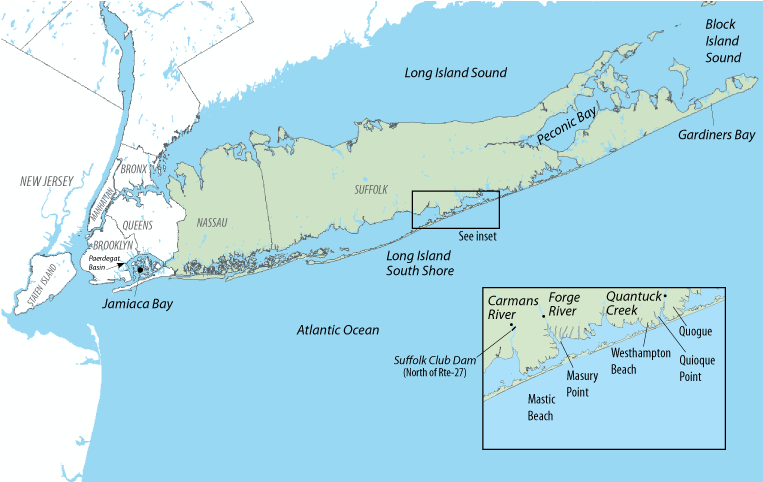
| Atlantic Ocean 2,3 (Nassau, Queens, Suffolk) Block Island Sound 2,3 Gardiners Bay2,3 Jamaica Bay2,3(Nassau, Kings, Queens) Long Island Sound2,3 Long Island South Shore,2,3 excluding tidal portions of Carmans River, Forge River, and Quantuck Creek (Nassau, Queens, Suffolk) Lower New York Bay, south of Verrazano Narrows Bridge2,3 |
Weakfish | Greater than 25", up to 1 meal/month; Less than 25", up to 4 meals/month | Greater than 25", DON'T EAT; Less than 25", up to 1 meal/month | PCBs |
| Striped bass | Up to 4 meals/month | Up to 1 meal/month | PCBs | |
| Crab or lobster tomalley and cooking liquid 2 | DON'T EAT | DON'T EAT | PCBs, Dioxin, Cadmium, PFAS | |
| Bluefish | Up to 4 meals/month | Up to 1 meal/month | PCBs | |
| American eel | Up to 4 meals/month | Up to 1 meal/month | PCBs | |
| All other fish and crabs | Follow the FDA guidelines. | |||
| Carmans River, tidal portion from Southaven Park Dam to Beaverdam Road (Suffolk)
Quantuck Creek, tidal portion between Old Ice Pond and Quioque Point (Suffolk) Forge River, tidal portion from Montauk Highway Dam/West Millpond Dam to Masury Point |
Weakfish | Greater than 25", up to 1 meal/month; Less than 25", up to 4 meals/month | Greater than 25", DON'T EAT; Less than 25", up to 1 meal/month | PCBs, PFAS |
| Striped bass | Up to 4 meals/month | Up to 1 meal/month | PCBs, PFAS | |
| Crab or lobster tomalley and cooking liquid | DON'T EAT | DON'T EAT | PCBs, Dioxin, Cadmium, PFAS | |
| Bluefish | Up to 4 meals/month | Up to 1 meal/month | PCBs, PFAS | |
| American eel | Up to 1 meal/month | DON'T EAT | PCBs, PFAS | |
| All other fish and crabs | Follow the FDA guidelines. | Up to 1 meal/month | PFAS | |
The sensitive population refers to people who can become pregnant (the age of 50) and children under 15. The general population refers to everyone else.
1 The specific health advisories for the waters listed above also apply to tributaries (for example, Gowanus Canal and Newtown Creek) and connected waters if there are no dams, falls, or barriers to stop the fish from moving upstream.
2 DON'T EAT the soft "green stuff" (mustard, tomalley, liver, or hepatopancreas) found in the body section of crabs and lobsters from any waters because cadmium, PCBs, and other contaminants concentrate there. As contaminants are transferred to cooking liquid, you should also discard crab or lobster cooking liquid.
3 Check the NYS DEC website for updated marine regulations and special restrictions for certain species. Please note that all fresh water bodies in New York City parks are catch and release only and are not regularly monitored for contaminants. For more information visit: NYC regulations.
4 No eels may be possessed for food in the East, Harlem, and tidal Hudson Rivers. Visit the NYS DEC Marine Regulations website for updated regulations and special restrictions for certain species.
The public is also reminded that all New York City waters are closed to shellfishing (harvesting of clams, mussels, oysters or scallops).
Maps
New York City Area Map
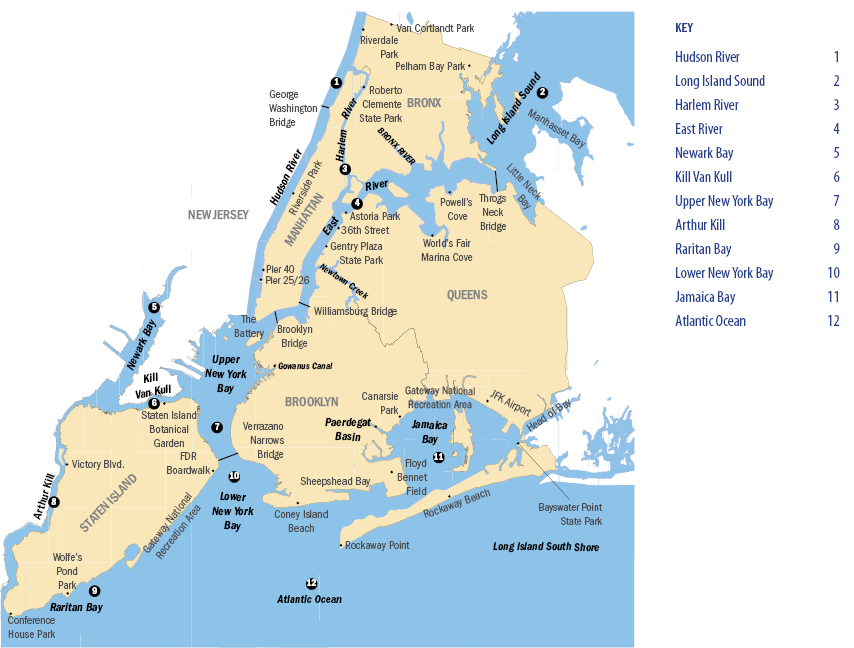
Long Island Marine Waters Map